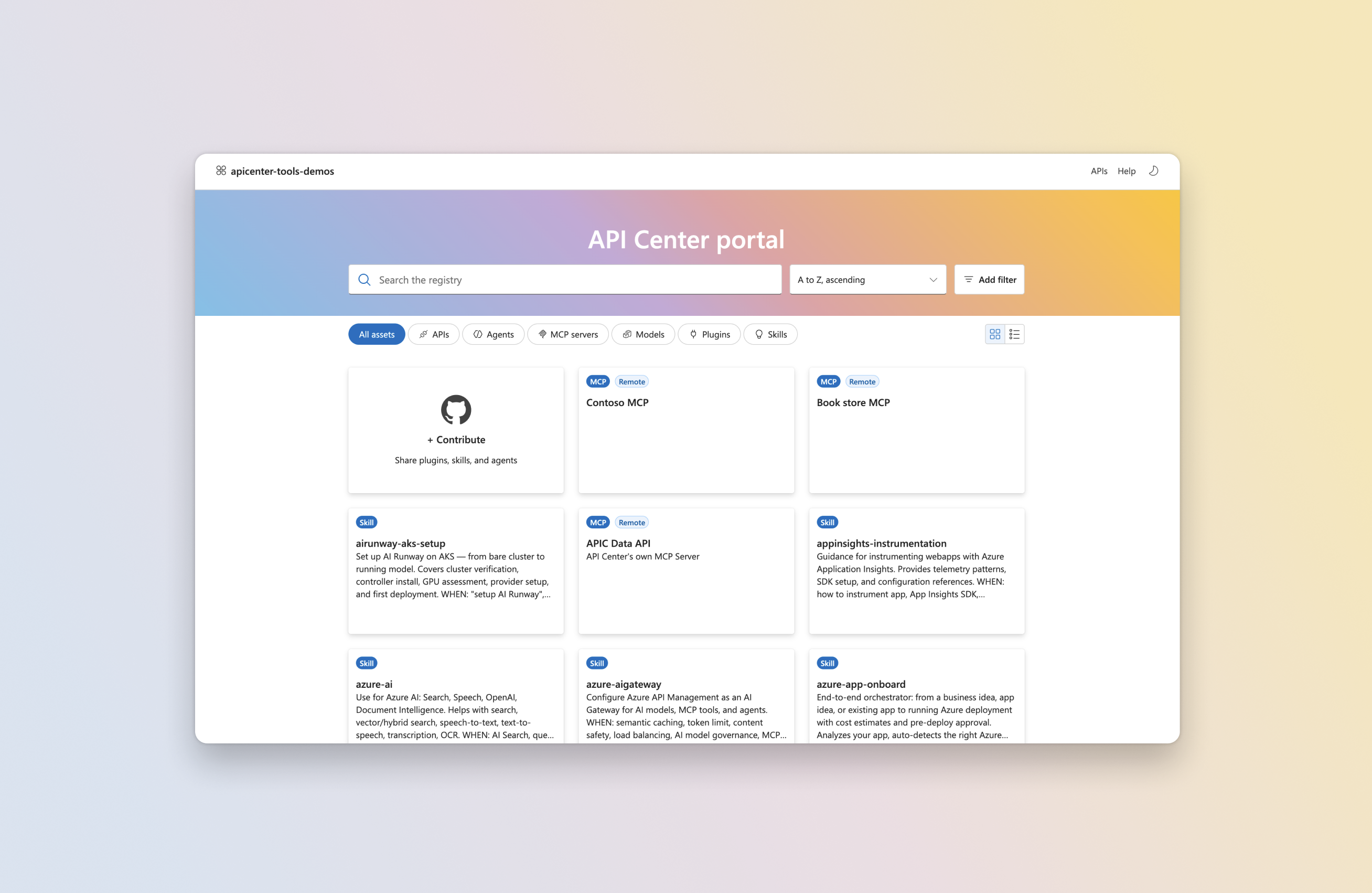
API Center
As my project is under NDA, I can't disclose full project details. If you are interested in learning more, please reach out to me at clairedycat.kantner@gmail.com.
Problems with our existing developer portals
Only built for APIs. The Azure portal interface offers traditional APIs like REST, but lacks infrastructure to support a modern AI developer's tools such as MCP servers, skills, agents, plugins, or models.
Inconsistent, dated UI. Detail pages diverged in layout, with some content living in slide-out drawers, others in full pages. It lacked a shared card system, dark mode, and responsiveness.
Hard to actually consume. Endpoints weren't easily copyable and install actions were buried, so "I found it" rarely led cleanly to "I'm connected."
Registration gaps. Publishing new asset types through the Azure Portal surfaced missing or confusing fields, making it hard to register an asset correctly the first time.
How might we make it effortless for an AI-native developer to discover, trust, and consume any kind of asset through one consistent, modern portal?
Design principles
Discoverable
One portal to find every asset type. A unified discovery homepage and consistent iconography aligned with Microsoft's Fluent design system.
Consumable
Optimize for the moment after discovery. Copyable endpoints, clear install actions, and remote/local guidance turn "found it" into "connected" in seconds.
Extensible
Design a system that scales to new AI-era asset types. Shared patterns for tabs, badges, documentation, and quality assessments so the next asset type slots in instead of starting over.
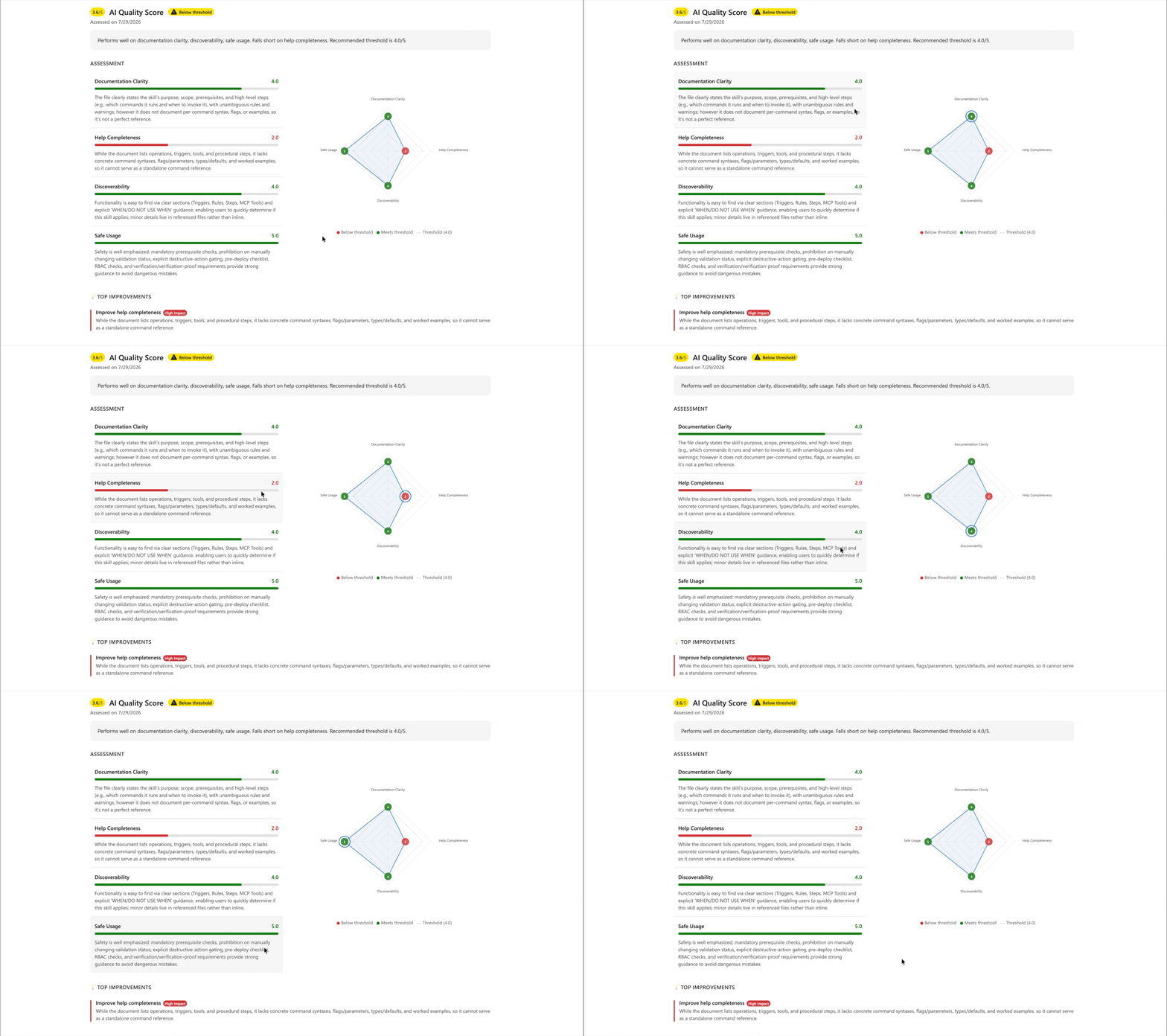
ai assessments
AI often makes mistakes and not all assets in a catalog are trustworthy. I designed and implemented an AI quality score view to help developers decide which agent skills in the catalog are vetted.
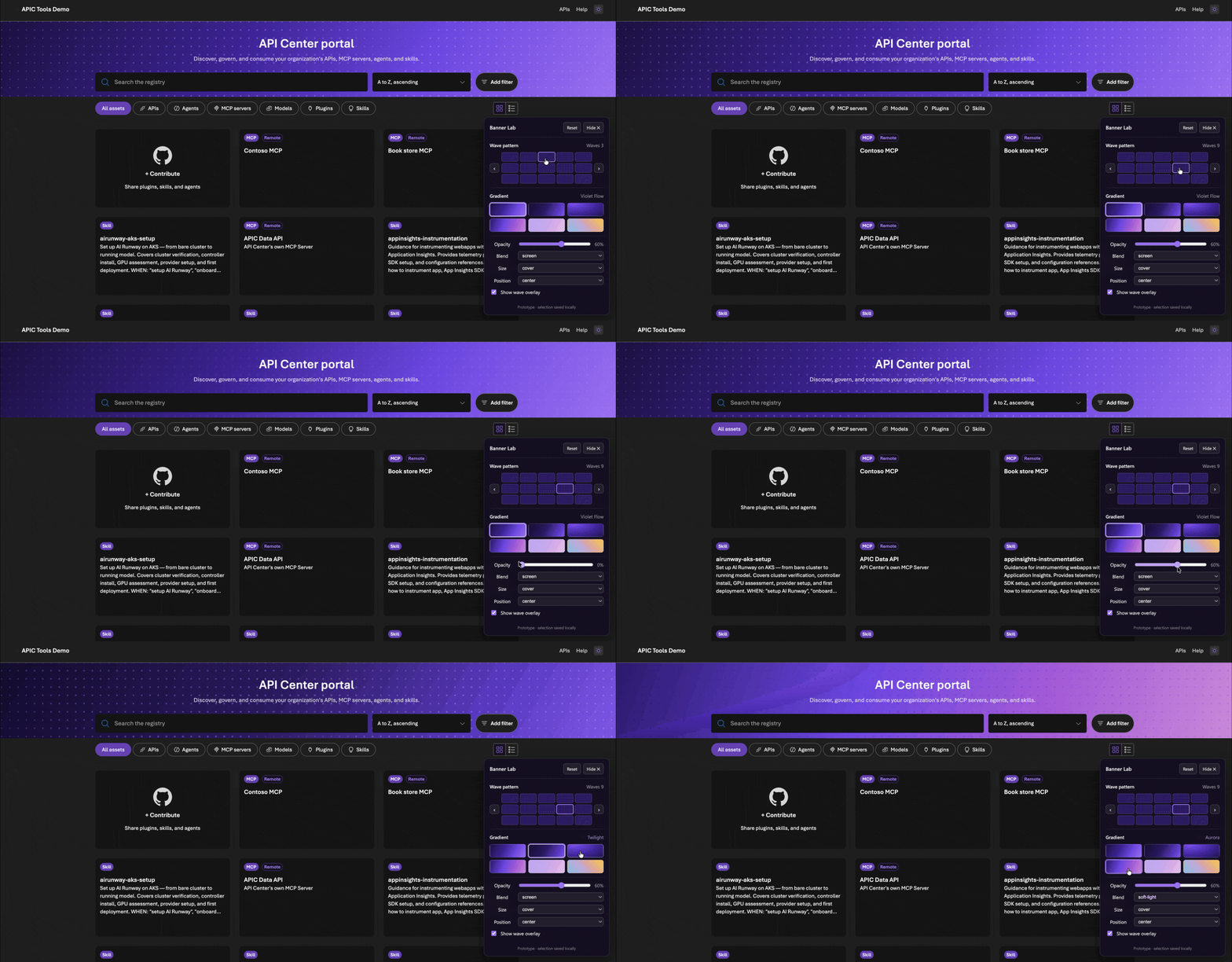
prototyping with ai
My biggest learning experience was embracing AI coding tools to empower my design workflow. For example, I used Copilot to code my own prototyping settings to quickly compare UI options in context. Once I was happy with a direction, I could easily push designs directly to the codebase, saving tons of back-and-forth we had before during engineering handoff.
Project impact
Shipped designs to our 2,600+ enterprise customers, including Fortune 500 companies.
+117% Standard SKU adoption growth year over year.
6 new asset types offered beyond traditional APIs.
20+ Pull requests merged to the open-source APIC developer portal repo on GitHub


